
The first appointment · Prevention
Your first visit to a family practice
Bring a photo ID, your insurance card, a list of your medicines and doses, and any records from your last clinician.
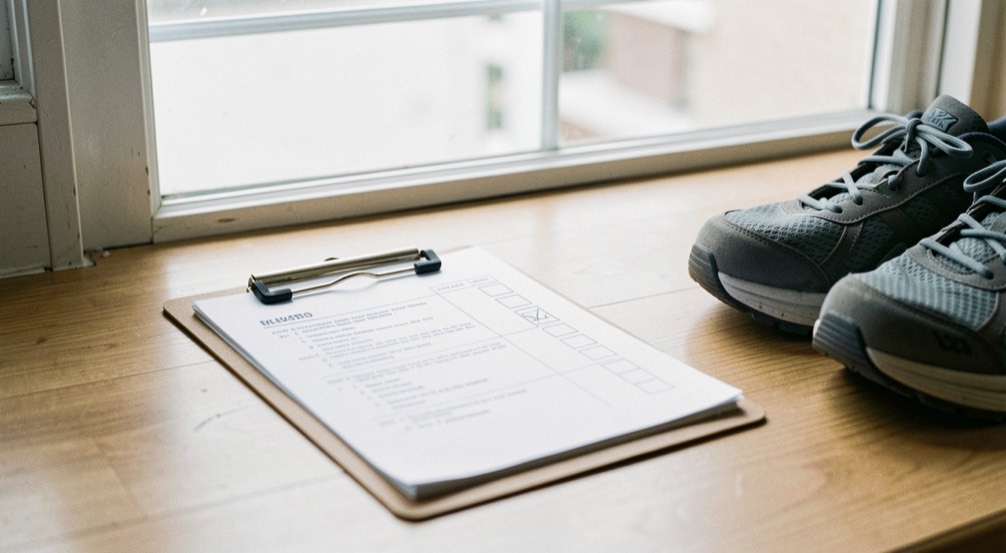
Bring a photo ID, your insurance card, a list of your medicines and doses, and any records from your last clinician. A first visit is mostly history taking, so the paperwork matters more than the exam. An annual physical covers vitals, a review of your health risks, screening tests, and vaccines. A patient portal works well for refills, results, and scheduling, while a phone call fits urgent problems and anything that needs a conversation.
What should I bring to a first visit at a new family practice?
Treat the first appointment as a records handoff, not a checkup. The clinician spends most of the hour learning who you are, and the front desk needs proof of who you are before that starts.
Pack these items:
- Photo ID and your insurance card, or your Medicaid or Medicare card.
- A written list of every medicine, vitamin, and supplement you take, with the dose and how often.
- The name and phone number of the pharmacy you use.
- Names of past clinicians, with dates and cities if you have them.
- Immunization records, especially for children and for anyone enrolling in school or a new job.
- Recent lab results, imaging reports, or discharge papers, if you have copies.
- A short list of your questions, written down before you walk in.
If you cannot find old records, say so at check-in. Staff at community health centers often request them for you, and that request can take weeks. A simple written checklist helps here, and The Tideline Journal keeps a plain-language first visit family practice checklist that walks through the same items for rural families.
Bring a pen. You will sign a privacy notice, a consent to treat, and often a release that lets the new office request your old chart. Ask for a copy of anything you sign if you want one.
For children, bring the school or daycare form that needs a signature, plus the immunization record. For anyone who needs an interpreter, ask for one when you book the visit, not at the door.
What actually happens during an annual physical exam?
An annual physical is a structured review, not a search for hidden disease. The exact steps vary by age, sex, and risk factors, but the shape of the visit is fairly steady.
A medical assistant usually starts with vitals: blood pressure, pulse, temperature, height, and weight. Some offices add a pulse oximeter reading. You then answer questions about tobacco, alcohol, sleep, mood, diet, exercise, falls, and safety at home.
The clinician examines what your history suggests. That may include listening to your heart and lungs, checking your abdomen, looking at your skin, and testing strength, reflexes, and balance. For adults, the exam often includes a depression screening and a check of your feet if you have diabetes.
Screening tests depend on your age and risk. Common examples include a blood pressure check at every visit, a lipid panel and blood sugar test for many adults, cervical cancer screening for some age groups, mammography for some, and colorectal cancer screening starting around age 45 for average-risk adults. Vaccines are reviewed at the same visit: flu, COVID-19, tetanus, shingles, pneumococcal, and others as recommended.
You leave with a plan. That plan may be a lab order, a referral, a prescription, a vaccine, or simply a note to come back in a year. Ask what each test is for and when you will hear results. If a result needs follow-up, the office should tell you how and when.
An annual physical is not a full-body scan and it does not catch everything. It is a scheduled moment to review risk, update prevention, and raise anything you have been putting off.
When should I use a patient portal instead of calling the clinic?
Use the portal for anything that can wait a day or two and does not need a back-and-forth conversation. Call for anything urgent, anything that needs a decision now, and anything that is hard to explain in writing.
Good portal tasks:
- Requesting a refill on a medicine you take regularly.
- Asking a billing question about a statement you received.
- Viewing lab results after the office releases them.
- Sending a non-urgent question about a rash, a form, or a school note.
- Scheduling a routine visit or rescheduling one you cannot make.
- Updating your address, phone number, or insurance.
Call the clinic instead when:
- You have chest pain, trouble breathing, severe bleeding, or a sudden change in vision or speech. Those are emergency symptoms. Call 911.
- You need care today for a fever, an injury, or a sick child.
- You are out of a medicine you take daily and cannot wait.
- You have a question that needs several answers in a row.
- You have not heard back about a result or a referral and the wait is past what you were told.
Rural clinics often run on thin staffing, so portal messages may be answered by a nurse or medical assistant rather than the clinician. Response times are usually stated on the portal itself. If a message goes unanswered past that window, call.
One more habit: keep the portal login somewhere you can find it, and check it after every visit. Results, after-visit summaries, and vaccine records often land there first.
How do you prepare questions that get answered?
Write three questions, no more, and put the most important one first. Vague questions get vague answers.
Instead of asking whether a test is needed, ask what the test would change. Instead of asking whether a symptom is serious, describe when it started, what makes it better or worse, and what you have tried. Instead of asking about a medicine in general, ask about the dose you take and what to do if you miss one.
Bring the list of medicines even if you think the office already has it. Records travel slowly between systems, and the list in your hand is the one the clinician will trust.
If you leave without understanding the plan, say so before you go. Ask for it in writing. A short note in your own words, kept with your medicine list, is enough.
What changes if you live far from the clinic?
Distance changes the logistics, not the medicine. Book the first visit for a day when you can stay in town a little longer, in case labs or a vaccine are added on the spot.
Ask whether the visit can be partly done by video. Many family practices now offer a video option for follow-ups, medication checks, and results reviews, while keeping the first visit and the physical in person. Ask which parts of your care can be remote and which cannot.
Ask about after-hours options before you need them. Some rural practices share a nurse line, some send you to an urgent care in the next town, and some route you to a telehealth service. Know which one applies to you, and write the number down.
If cost is a concern, ask about the sliding fee scale. Community health centers that receive federal funding are required to offer one, and it is based on income and family size. Ask what to bring to apply, usually a recent pay stub or a letter about benefits.
Finally, plan the next visit before you leave the building. A year goes by quickly, and a scheduled date is easier to keep than a reminder to call later.
This article is general information, not medical advice. Talk with your own clinician about your situation. In an emergency, call 911.
A neighbouring question is taken up in how ventilator breathing circuits differ, and heart health numbers sets out the rest of this magazine's method.
Public sources cited on this page
Where to read next
- Heart disease prevention stepsThe World Health Organization describes most premature heart disease as preventable.
- Heart health numbers worth knowingA handful of measurements quietly describe most of a heart's working conditions.
- Glossary sheet: blood pressureThe term blood pressure defined in one page of the signature glossary.
- The everyday heart checklistTen lines that compress every habit this magazine explains.