
Glossary sheet
Blood pressure, in plain words
The most measured number in medicine: what the cuff squeezes, what the two figures mean, and why the reading belongs in a conversation rather than a verdict.
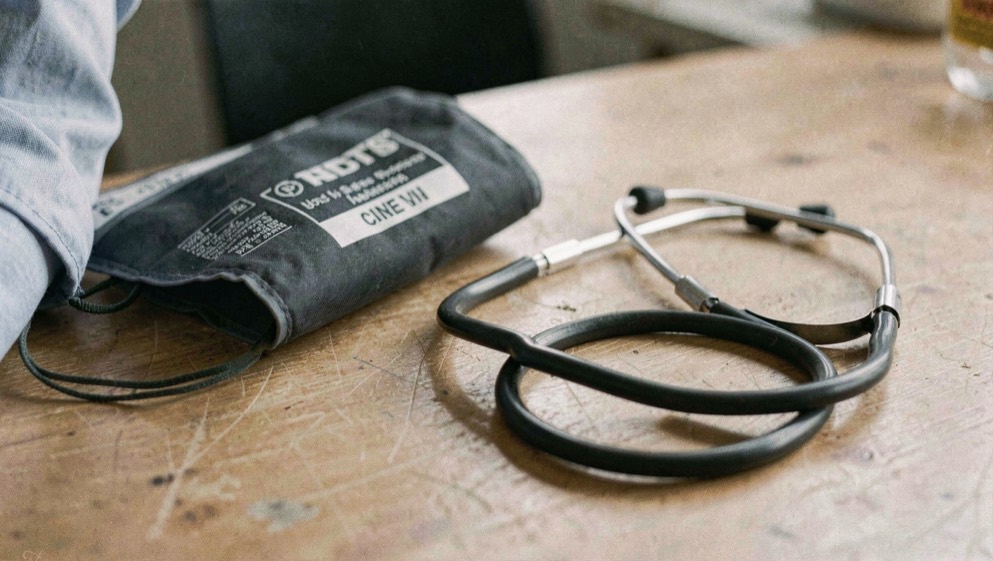
Blood pressure is the force blood exerts on the walls of the arteries as the heart works, and it is written as one number over another. The first, systolic, is the pressure at the peak of the squeeze. The second, diastolic, is the pressure between beats while the heart refills. A reading like 118 over 76 is a pair of these peaks and rests, measured in millimeters of mercury, an echo of the mercury columns the first devices used.
How the reading happens
A cuff wraps the upper arm, inflates until it briefly stops the flow, then releases. As flow returns, the device, or the clinician listening, captures the two pressures. Honest measurement has quiet rules: feet flat, back supported, arm at heart height, no talking, a few minutes of rest first, and sometimes two readings a minute apart. Coffee, a full bladder, hurry and conversation all nudge the figure, which is why single readings diagnose nobody.
The public categories
The American Heart Association publishes categories for adults that are widely reused: normal is described as below 120 over 80; elevated as systolic between 120 and 129 with a diastolic below 80; stage 1 hypertension from 130 over 80; stage 2 from 140 over 90; and a hypertensive crisis, a medical emergency, from 180 over 120. The WHO adds the epidemiological fact that matters most: hypertension is common, largely silent, and one of the leading drivers of cardiovascular disease worldwide.
What it does and does not tell you
The reading is a snapshot of load, not a report of damage: it says what the arteries are carrying right now, and patterns over weeks decide whether that load is a condition. It also responds to life, sodium, activity, sleep, stress and medication among the levers described across the prevention pages of this magazine, which is why a number that improves says something and a number that worries says see a clinician, not see a forum. Home devices are accurate enough to inform a conversation when the cuff fits and the log is honest, dated, and brought to the appointment.
Related entries: cholesterol travels through the same arteries and is described in its own sheet; resting heart rate is the other famous bedside number. For how the numbers fit into prevention, the heart health numbers page and the everyday heart checklist place this one in its context.
Blood pressure is one number among many. asking for support at work looks at pressure of another kind, when heavy sweating deserves a doctor covers a symptom that is easy to ignore, and warning signs before joining a seminar gathers the checks to make before a difficult weekend.
Public sources cited on this page
Continue in the glossary
- cholesterolAnother sheet of the signature resource.
- The full indexEvery term, one sentence each.